Dementia care is complex. It should not feel chaotic
When someone you love is living with dementia, care rarely follows a clean schedule. It unfolds in pieces. A daughter helps in the mornings before work. A hired caregiver comes in the afternoon. A spouse manages medications. A nurse checks in periodically. Everyone is trying to help, but information often lives in different places. It sits in notebooks, in text messages, in memory, or in conversations that never get passed on.
Over time, this fragmentation creates stress. Important details are forgotten. Patterns are difficult to see. Decisions feel uncertain because no one has the full picture.
blueBell Connect was designed to bring structure and continuity to shared dementia care. It centralizes coordination, documentation, and personalized support so families can move from scattered information to shared understanding.
Personalized Dementia Care Recommendations
Most caregivers spend hours searching for answers. They want to know why agitation increases at certain times of day, how to redirect without escalating, or what activities might still feel meaningful. The advice they find is usually general. Dementia, however, is deeply personal.
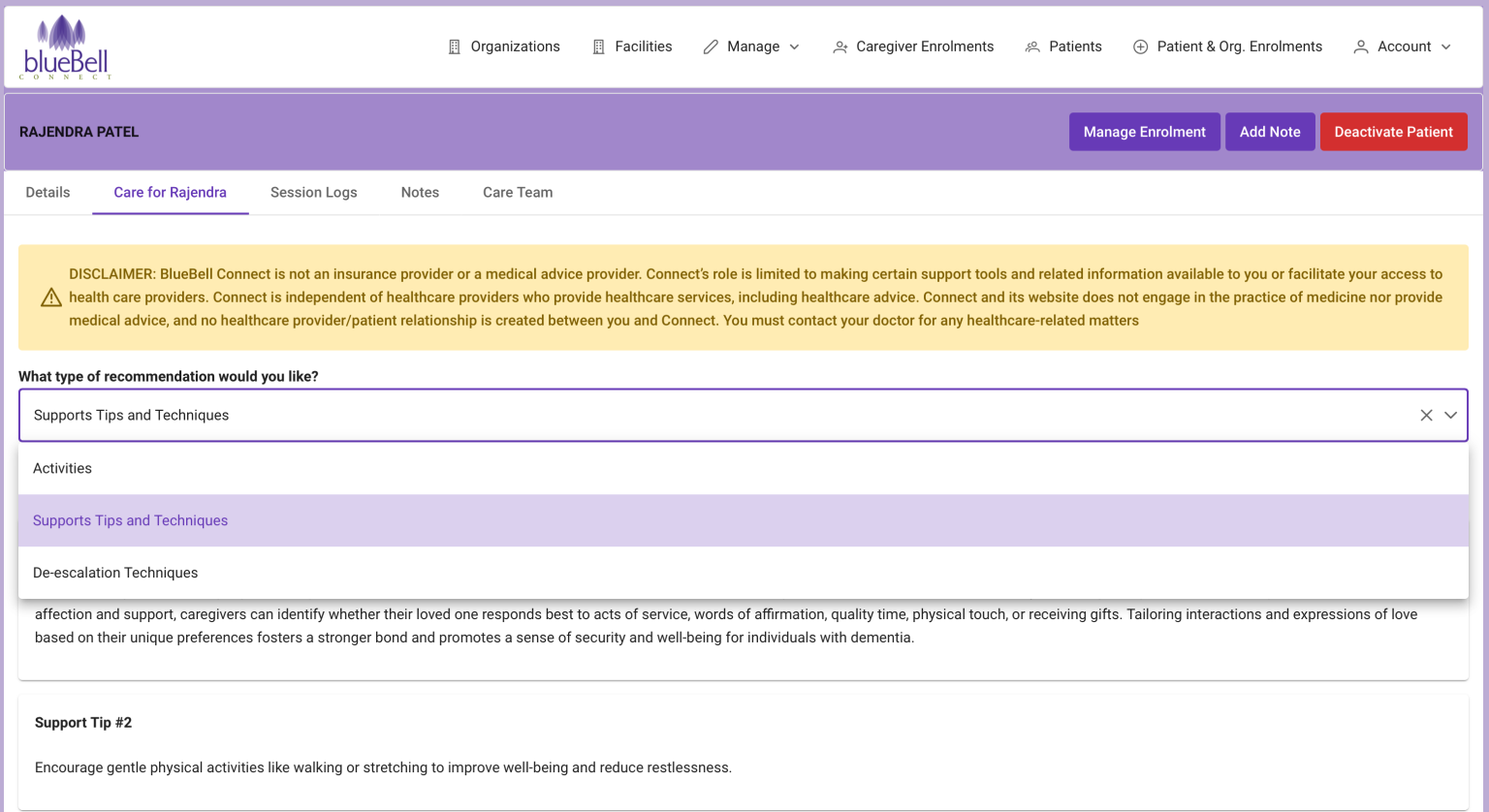
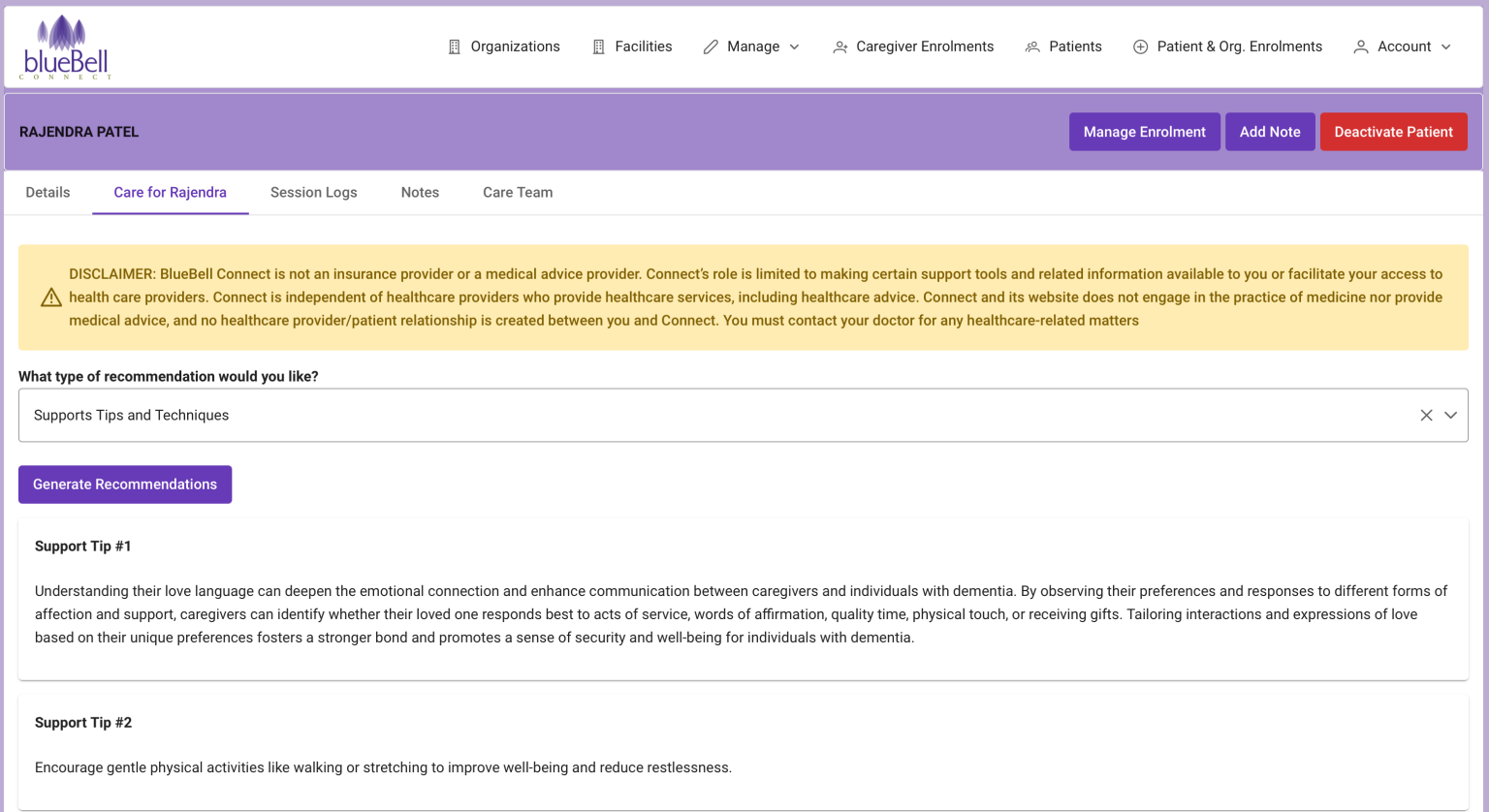
blueBell Connect provides personalized dementia care recommendations that are clinically grounded, personally specific, and culturally appropriate. The system considers the individual’s history, preferences, behaviors, and evolving needs to generate guidance that feels relevant to the real situation at hand.
These recommendations may include communication approaches, de-escalation strategies, activity suggestions, or environmental adjustments that are tailored to the individual rather than based solely on diagnosis.
This recommendation system is supported by our patent-pending technology (WO/2026/006904).
The purpose is not to replace professional medical advice. It is to help caregivers feel more informed and more confident when navigating the daily realities of dementia care.
Centralized Session Logs
Dementia changes gradually. One caregiver may notice small swallowing difficulties. Another may observe changes in sleep. A family member may sense a shift in mood but struggle to describe it clearly during a medical appointment.
Without structured documentation, these observations remain isolated. Over time, valuable insight is lost.
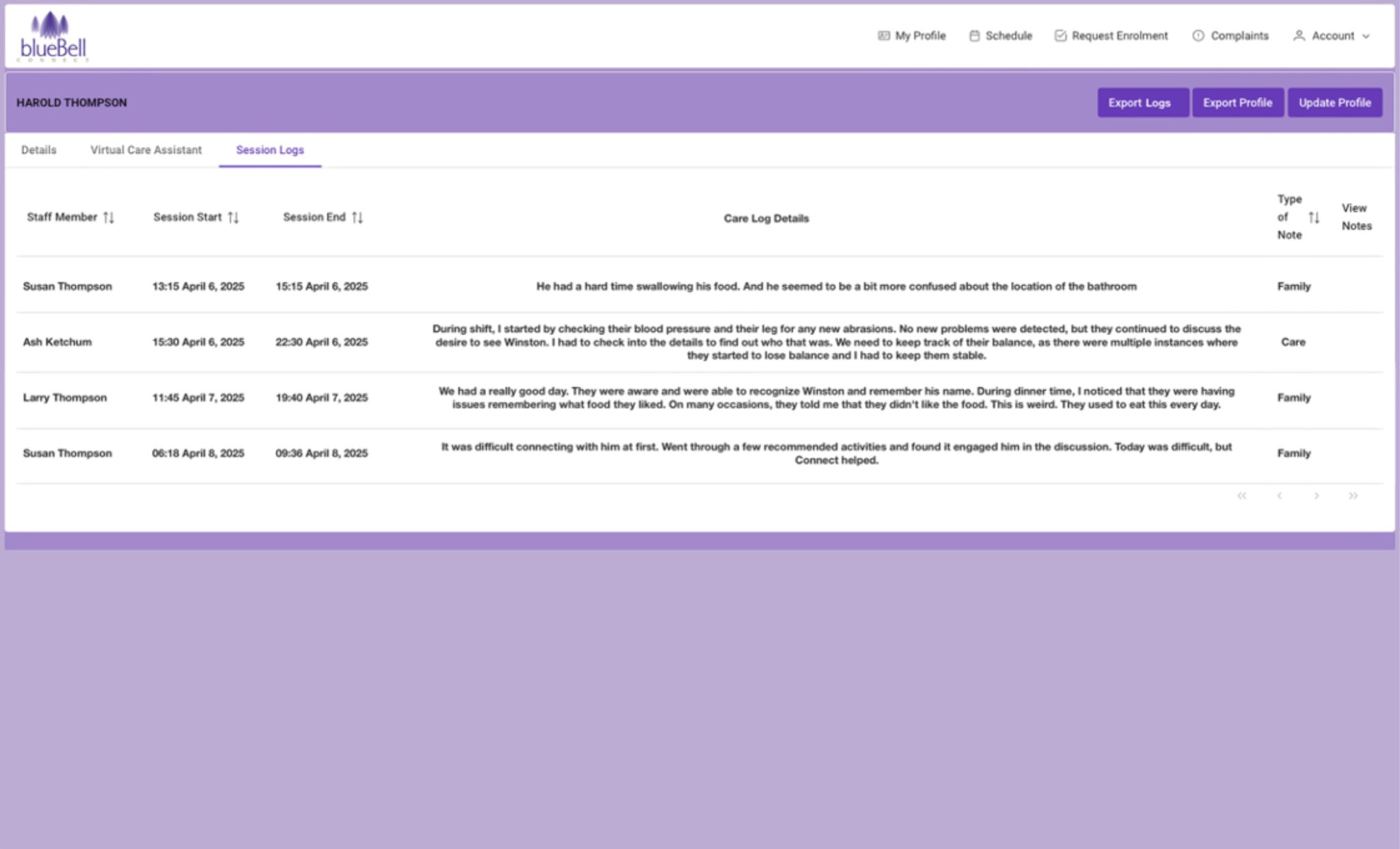
blueBell Connect allows multiple caregivers to document care sessions in one secure location. Behaviors, physical changes, mood patterns, interventions, and outcomes can be recorded consistently across the care team. As entries accumulate, families begin to see patterns that would otherwise remain invisible.
This longitudinal record supports more informed conversations with physicians and health professionals. It also reduces the burden placed on one primary caregiver to remember and interpret everything.
Care improves when knowledge is shared and preserved.
Shared Caregiver Calendar
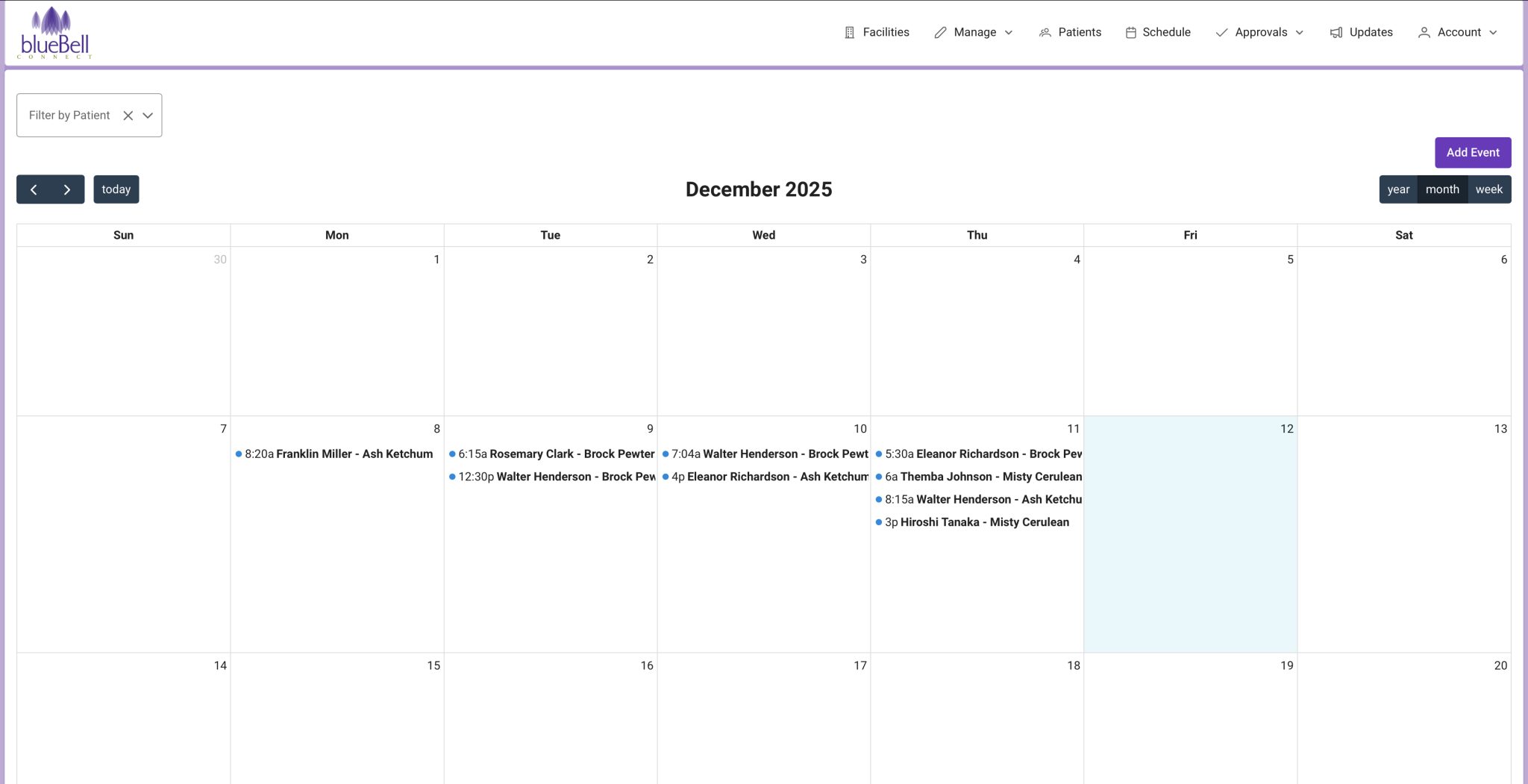
Caregiving schedules are rarely simple. Family members adjust their availability. Professional caregivers rotate shifts. Appointments are added or rescheduled.
Without a centralized system, confusion can easily arise. Two people may assume the other is covering a shift. Important visits may be overlooked. The emotional load of managing schedules often falls on one person.
blueBell Connect provides a shared caregiver calendar that integrates both family and hired caregivers. Everyone can see who is providing care and when. This visibility reduces misunderstandings and strengthens accountability across the care team.
Clear coordination does not eliminate the emotional weight of caregiving, but it reduces unnecessary stress.
Care Team Directory
In many families, only the primary caregiver fully understands who is involved in care. They know the hired support workers, the agency contacts, the physicians, and the extended family members who help occasionally.
If something happens to that primary caregiver, this information can be difficult to reconstruct.
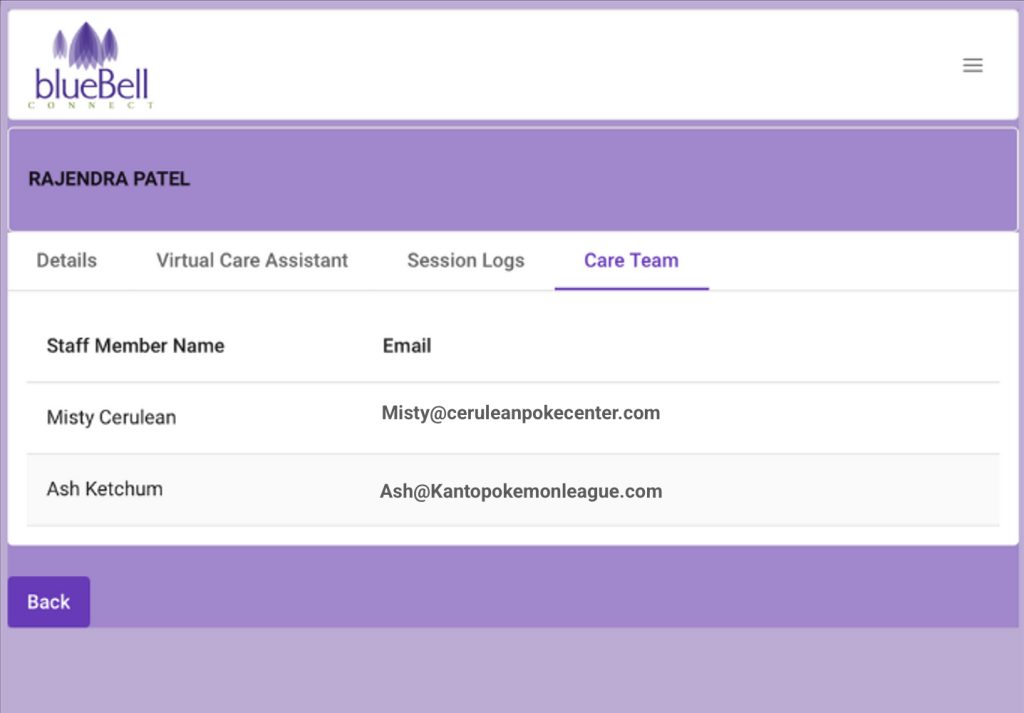
blueBell Connect includes a centralized care team directory so families can clearly see who is involved, what their role is, and how to contact them. This ensures continuity and transparency across the care network.
Dementia care should not depend on one individual holding all the information. It should be shared and accessible.